
Neighborhood · São Paulo/SP
Sumarezinho
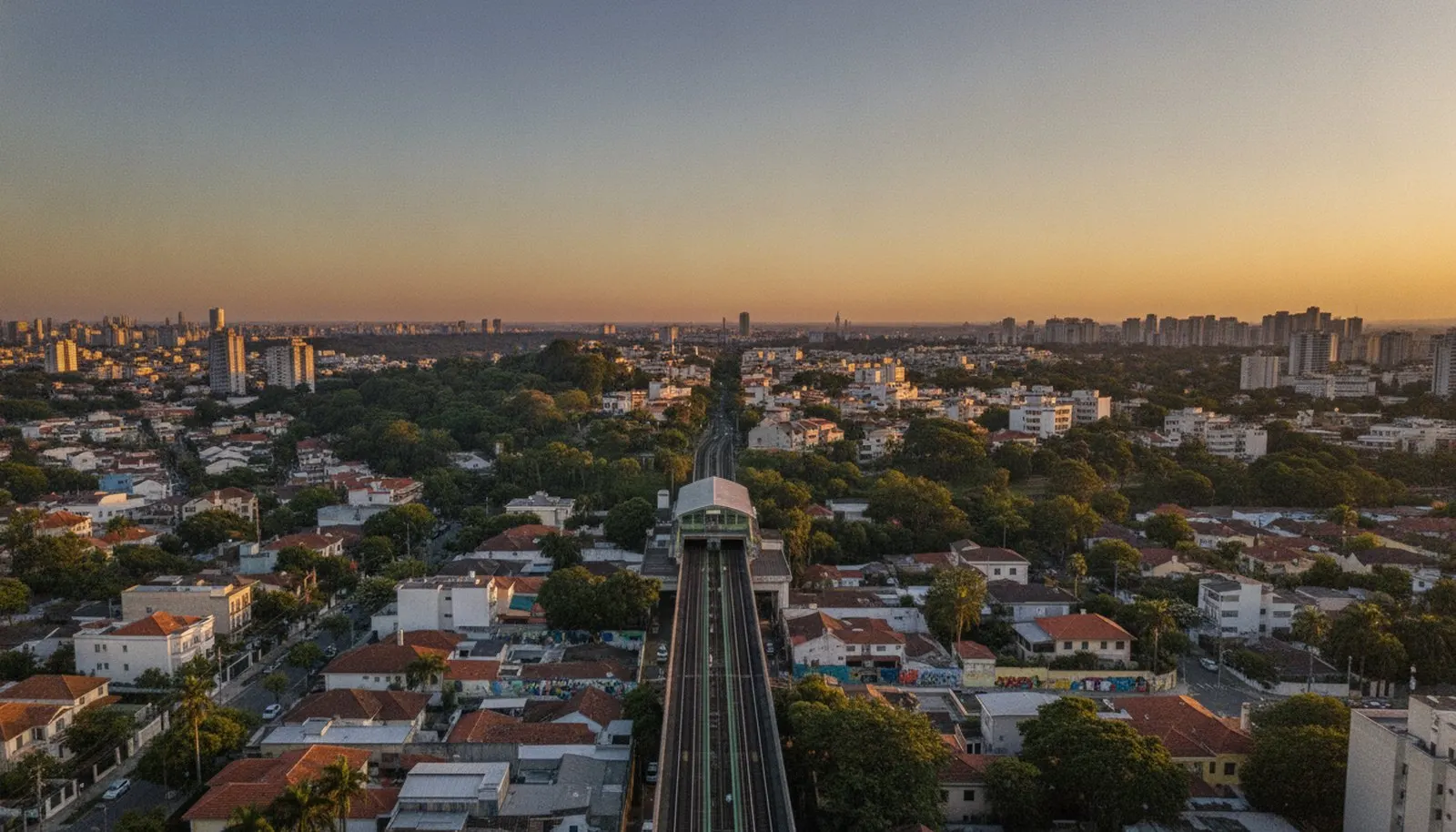
Four blocks between Sumaré and Vila Madalena, with the metro terminal in the middle: it's the name the Post Office gives to Rua Harmonia and Rua Senador César Lacerda Vergueiro — and one nobody in the market uses.
The neighbourhood’s story
Sumarezinho is a small neighbourhood in the western zone, within the district of Pinheiros and the subprefecture of the same name. It occupies a narrow strip between Sumaré and Vila Madalena, and it is in this strip that Estação Vila Madalena sits — the terminal of Line 2-Green. The streets that make it up are well known: Girassol, Wisard, Rodésia and Harmonia. The ground here comes from the slicing-up of the old Fazenda do Butantã, in the 19th century, when agricultural expansion broke the estate into smaller properties. Its real urbanisation dates from the early 20th century, with Italians and migrants from other regions of the country, and with the workers’ villages that São Paulo’s industrialisation brought along with it. What remains of that is the layout: short blocks, old houses next to new buildings, dense tree cover and a residents’ association — the AMadá — that treats Sumarezinho, Vila Madalena and the surrounding area as a single thing. The terrain is gentle, between 700 and 800 metres above sea level, and CRECI classifies the area as Value Zone B, on the same rung as Jardim Paulistano and Vila Olímpia.
The particularity that matters to buyers is one of address, and it is a hard one. The Post Office registers the whole of Rua Harmonia — postcodes 05435-000 and 05435-001, right to the end of the numbering — and Rua Senador César Lacerda Vergueiro on both sides, as Sumarezinho. Never as Vila Madalena. The market, the residents, the developers who launch there and the buildings’ own names all say Vila Madalena, and they are not wrong: it is the Vila that one lives in, the metro is the Vila’s, and street life is the Vila’s. The house’s rule resolves the impasse without erasing either side: the postcode governs the address, market usage governs the neighbourhood.
It is a strip, not an extensive neighbourhood — and the part of it right next to the metro sits in a ZEU, the axis zone that the 2016 law opened up for densification. That means the good plots have already been taken by the latest crop of towers, and the low-rise blocks that remain don’t have the land to repeat the operation.
Sumarezinho: the name only the postman uses. Four blocks between Sumaré and Vila Madalena, with the metro terminal and the most contested streets in the western zone inside them.
The surrounding area
- Clubs: the neighbourhood has no club within it; associative life is resolved by heading up to Clube Alto de Pinheiros or down to Esporte Clube Pinheiros, both just minutes away.
- Schools: Colégio Oswald de Andrade and the traditional and international schools of Pinheiros and Alto de Pinheiros, all within the same walking radius or five minutes away.
- Dining and lifestyle: the blocks of bars, restaurants and galleries of Vila Madalena — Aspicuelta, Fidalga, Girassol, Mourato Coelho — begin here, not on the other side of some border; add to that the Feira da Praça Benedito Calixto, on Saturdays, and the street markets the neighbourhood keeps up as a neighbourhood tradition.
- Parks: Parque Córrego das Corujas, a linear neighbourhood park that belongs to Sumarezinho and not to the Vila; Praça Pôr do Sol, at the top of Alto de Pinheiros; and Parque Villa-Lobos, the area’s great green lung.
In the Fragata archive
There are 4 developments from the portfolio with a Sumarezinho postcode: Altto Vila Madalena, Camboriú and Harmonia da Vila, the three of them on Rua Harmonia, and Latitude, on Rua Senador César Lacerda Vergueiro. The proof is in the very names of two of them: one is called Altto Vila Madalena, the other Harmonia da Vila — and both receive mail addressed to Sumarezinho. It is the cleanest case of the house’s rule in the entire archive.