
Neighborhood · São Paulo/SP
Vila Romana
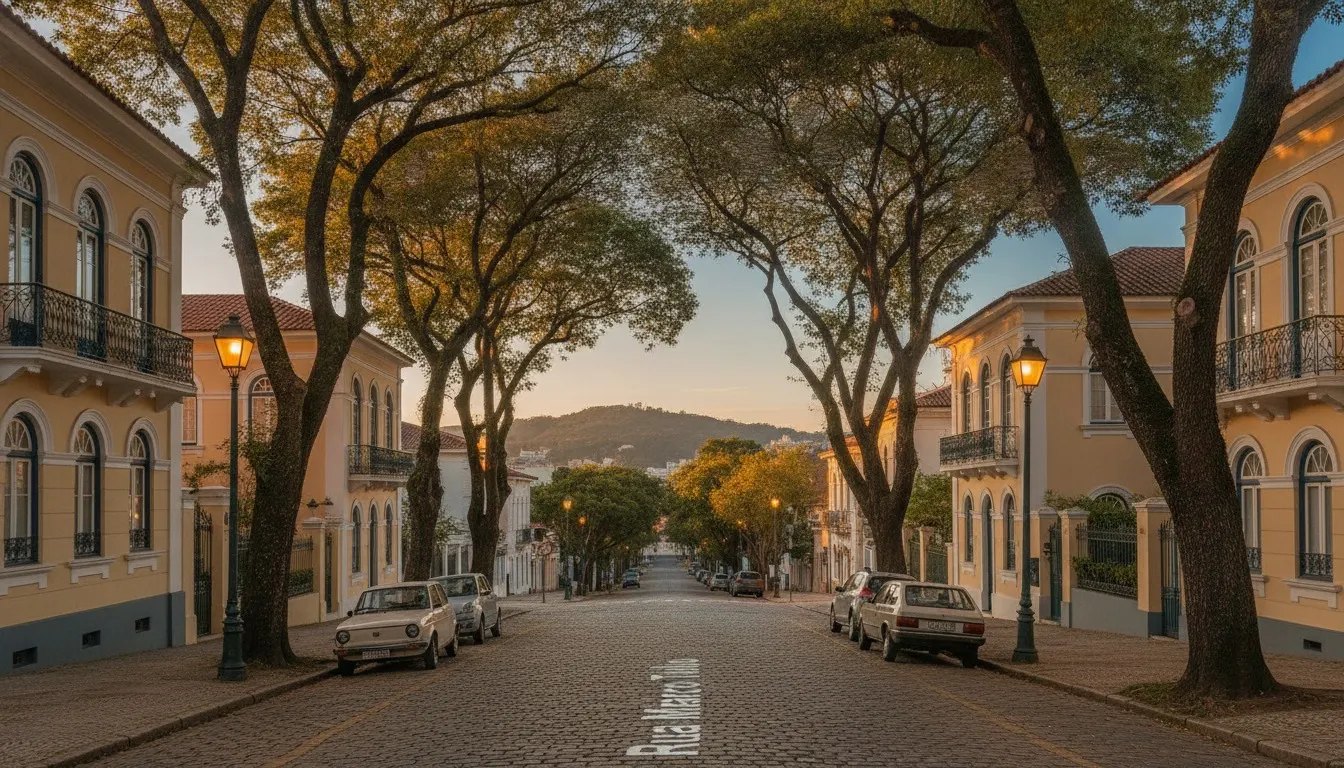
The Italians who formed the neighbourhood named its streets after the whole of Rome — Tito, Vespasiano, Marco Aurélio, Espártaco, Fábia. And they left behind blocks of ten thousand square metres that industry occupied and residential inherited.
The neighbourhood’s story
Vila Romana is a neighbourhood of the Lapa district, in the western zone, born from a subdivision planned back in the 19th century into smallholdings of around ten thousand square metres each. The first residents, of Italian descent, gave the streets the names of Roman emperors, generals, jurists and gods — always by first name: Tito, Cláudio, Vespasiano, Marco Aurélio, Espártaco, Crasso, Catão, Camilo, Mário, Duílio, Aurélia, Marcelina, Coriolano, Scipião, Faustolo, Caio Graco, Fábia and Praça Cornélia. Rua Fábia, for instance, does not honour an emperor: Fábia was a vestal virgin, Terência’s half-sister and Cícero’s wife.
The size of those blocks explains the neighbourhood as it is today. The smallholdings were occupied by industry — the Companhia Melhoramentos de São Paulo, a paper maker, among them — and from the end of the 1950s onward, Vila Romana kept swapping factories and workers’ houses for residential buildings. That legacy gives it something rare in the western zone: land. Where most neighbourhoods only have house-sized lots, here there are condominium plots large enough for three towers and an entire leisure core. And it’s worth saying, since the name circulates: Vila Romana is this neighbourhood, in Lapa — the building of the same name on Alameda Lorena, in Jardins, has no relation to it.
The large plots came from the industrial past and are finite. Once the last warehouse has been converted, there is no way to reproduce, within a grid of small blocks, a condominium plot of more than ten thousand square metres.
Vila Romana: Rome in the name of its streets, factory ground in the size of its lots. The neighbourhood where the western zone’s club-condominium truly fit.
The surrounding area
- Clubs: Sesc Pompeia, at the end of Rua Clélia — courts, a pool and a theatre in the warehouse that Lina Bo Bardi converted —, Allianz Parque on the border with Perdizes, and ACM Lapa, a few minutes away.
- Schools: the traditional schools of Lapa and Perdizes — Colégio Santo Ivo, in Alto da Lapa, and Colégio Santa Marcelina are within the same radius.
- Dining and lifestyle: Praça Cornélia, on Rua Clélia, with a crafts, antiques and traditional food fair on Fridays and Saturdays; Teatro Cacilda Becker, on Rua Tito; and the Bourbon Shopping, with cinemas and the Teatro Bradesco, next door in Pompeia.
- Parks: Parque da Água Branca, 136,000 m² of listed heritage with the air of a historic farm, and Parque Villa-Lobos, on the way to the river.
In the Fragata archive
There is 1 development from the portfolio in the neighbourhood (the backlinks panel lists it): Paradiso Vila Romana.
In the Fragata collection
One address in this neighbourhood is in the collection, with its full entry. Our curation keeps mapping the rest.